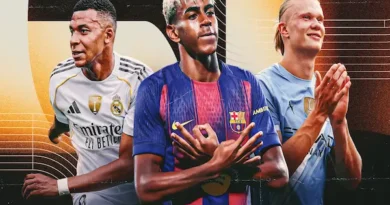
Most Memorable World Cup Finals
Anúncios
Anúncios
The most memorable World Cup finals are not just football matches — they are moments that stop the world, generate stories that span generations, and produce images that never leave the memory of anyone who witnessed them.
From last-minute comebacks that defied logic to individual acts of genius and infamy that eclipsed the final scoreline entirely, these matches define what the World Cup means beyond the trophy.
Every four years, the final at the world’s most prestigious sporting event carries the weight of national identity, individual legacy, and decades of footballing history into a single 90-minute contest — and the greatest finals have delivered on all of that simultaneously.
Whether you follow football closely or are building your knowledge before the 2026 tournament in North America, these are the five matches that every fan needs to know — the ones that still generate debate, still produce chills, and still define what a World Cup final can be when everything aligns.
See Also
- Greatest football rivalries of all time
- Top young football players to watch in 2026
- Best football players in the world right now
- How football evolved around the world
- Top international football tournaments to know
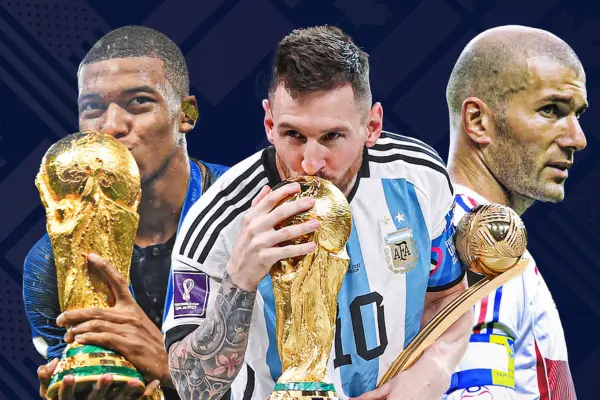
What Makes a World Cup Final Truly Unforgettable
Not every World Cup final becomes part of sporting mythology — many are tense, cautious affairs where the weight of the occasion suppresses the kind of football that would otherwise define a memorable match.
The finals that endure in collective memory share a specific set of ingredients: momentum shifts that overturn what seemed inevitable, individual performances that transcend the team context, controversial moments that remain argued decades later, and emotional arcs that feel like they were scripted rather than lived.
The five matches on this list each contain at least two of those ingredients — and the greatest of them contains all four simultaneously.
Understanding the players and the rivalries behind these finals adds a completely different layer to how you experience them — our guide to the biggest rivalries in football history provides the context that makes these results feel as significant as they genuinely were.
The 5 Most Memorable World Cup Finals in History
1. Argentina 3–3 France (2022) — The Greatest Final Ever Played
No World Cup final has ever delivered what the 2022 final in Lusail produced — and the consensus among players, coaches, and analysts across the sport is that it may never be matched in terms of raw drama, quality, and narrative weight in a single match.
Argentina were dominant for sixty-six minutes, building a 2–0 lead that looked utterly comfortable. Then, in the space of 97 seconds, Kylian Mbappé changed the entire story of the match — scoring twice to level at 2–2 and force extra time in a final that had appeared completely decided.
Extra time produced goals from both Messi and Mbappé again, sending the scoreline to 3–3 and forcing a penalty shootout that Argentina won 4–2. Lionel Messi, playing in what was expected to be his final World Cup, finally lifted the trophy that his career demanded — completing a narrative that football had been building toward for fifteen years.
Mbappé finished the tournament as its top scorer with 8 goals, including a hat-trick in the final — the first final hat-trick in World Cup history since Geoff Hurst in 1966. That this extraordinary individual performance still resulted in defeat tells you everything about how exceptional Argentina’s collective performance was on the night.
- Why it endures: The greatest comeback in final history, two all-time greats at the peak of their powers, and a penalty shootout finish that left no neutral watching unmoved
- The defining image: Messi lifting the trophy in Lusail, surrounded by his teammates, completing the only major honor his career had been missing
- The record: First World Cup final to finish 3–3 after extra time in the tournament’s 92-year history
2. Brazil 4–1 Italy (1970) — The Pinnacle of Beautiful Football
The 1970 final in Mexico City is not merely one of the most memorable World Cup finals — it is widely considered the single finest display of team football ever produced at the tournament’s highest stage.
Brazil’s squad that day featured Pelé, Jairzinho, Tostão, Gerson, and Carlos Alberto — a group of players whose combination of individual brilliance and collective cohesion has never been replicated. The final against Italy was also the first World Cup final broadcast in color, meaning the vivid yellow of Brazil’s shirts became part of a global visual memory that had never existed in previous editions.
Pelé’s opening header set the tone: a leap of extraordinary athleticism that produced a goal against Italy’s experienced goalkeeper Gordon Banks had failed to save earlier in the tournament. From there, Brazil produced football that even their opponents acknowledged was beyond what most teams could conceptually produce, let alone execute under final conditions.
Carlos Alberto’s fourth goal — a team move that involved virtually every outfield player and concluded with a thundering right-foot finish into the bottom corner — remains the gold standard against which every subsequent “team goal” in football is measured. It is not just the most iconic moment of the 1970 final; many consider it the greatest goal in World Cup history.
- Why it endures: The first color broadcast, the greatest squad ever assembled, and a level of attacking football that redefined what the sport could look like at its absolute best
- The defining image: Carlos Alberto’s run and finish for Brazil’s fourth goal, created by a move that began in their own half
- The record: Brazil’s third World Cup title — which, under the rules of the time, entitled them to keep the Jules Rimet Trophy permanently
3. West Germany 3–2 Hungary (1954) — The Miracle of Bern
The 1954 final carries more historical weight than almost any other match on this list — not just as a football result, but as an event that shaped national identity in a country still rebuilding from the Second World War.
Hungary’s “Magical Magyars” entered the final with a record that is almost impossible to believe in retrospect: unbeaten in international football for four years, and fresh from a 8–3 demolition of West Germany in the group stage of the same tournament. Every analytical assessment of the match pointed to a comfortable Hungarian victory — and for the first eight minutes of the final, those assessments appeared entirely correct, as Hungary scored twice to go 2–0 ahead.
What followed over the next eighty-two minutes in the rain of Bern, Switzerland, was one of sport’s most celebrated comebacks. West Germany scored three times to win 3–2, claiming their first World Cup title in circumstances that the entire footballing world struggled to process.
The match was later renamed “Das Wunder von Bern” — the Miracle of Bern — and its cultural significance in Germany extends far beyond football. It was the first major international success for the country after the war, a moment of collective achievement at a time when German identity was still in the process of being rebuilt. A German film of the same name, released in 2003, became one of that country’s most successful sports movies and introduced a new generation to what the result meant.
- Why it endures: The greatest pre-final form reversal in World Cup history, a comeback from 2–0 against a team considered unbeatable, and a result that carried meaning far beyond the football pitch
- The defining image: Helmut Rahn’s winning goal in the 84th minute, scored through mud and rain in front of a disbelieving crowd
- The record: Hungary’s only World Cup final appearance — a team considered one of the greatest never to win the tournament
4. Italy 1–1 France (2006) — The Final Defined by One Moment
The 2006 World Cup final in Berlin is almost unique among memorable World Cup finals in that it is defined entirely by a single moment rather than by the broader quality or narrative of the match itself.
Zinedine Zidane was playing the final professional match of his career. The French midfielder had already scored a trademark Panenka penalty — a audaciously chipped spot-kick that floated into the net off the underside of the crossbar — to give France the lead. With the match level at 1–1 heading into extra time, Zidane remained the most influential player on the pitch and the most likely source of a decisive moment.
The decisive moment came — but not the one anyone anticipated. In the 110th minute, Zidane turned and headbutted Italian defender Marco Materazzi in the chest, earning a straight red card and walking off the pitch in the final minutes of his professional career. Italy won the subsequent penalty shootout 5–3 to claim their fourth World Cup title.
The Zidane headbutt became one of the most replayed, analyzed, and debated moments in the history of sport almost instantly. The precise words Materazzi said to provoke the reaction were the subject of global speculation for years. The incident did not diminish Zidane’s legendary status — if anything, the paradox of his greatest player ending his career with his most notorious act became part of what makes him one of football’s most complex and compelling figures.
- Why it endures: Sport’s most famous act of individual madness in a final, a Panenka penalty that became an instant classic, and a penalty shootout conclusion that Italy needed despite dominating the decisive phase
- The defining image: Zidane walking past the World Cup trophy on his way off the pitch after his red card — trophy to his left, tunnel to his right
- The record: The only World Cup final to feature a red card for one of the match’s best performers
5. England 4–2 West Germany (1966) — The Most Controversial Final in History
The 1966 World Cup final at Wembley remains the most debated match in the tournament’s history — a game that simultaneously represents England’s greatest sporting achievement and contains one of football’s most enduring controversies.
Geoff Hurst’s hat-trick made him the first — and, until Kylian Mbappé in 2022, the only — player to score three goals in a World Cup final. The first and third goals are remembered straightforwardly as important contributions to a 4–2 England victory. The second goal, scored in extra time, has been argued about without resolution for nearly six decades.
Hurst’s shot hit the underside of the crossbar and bounced down toward the goal line. Swiss referee Gottfried Dienst consulted his Soviet linesman Tofik Bakhramov, who signaled a goal despite the ball’s position being ambiguous at best. West Germany protested that the ball had not fully crossed the line. England celebrated and held their 3–2 lead through to the final whistle, where Hurst added a fourth in the closing moments.
Subsequent analysis using modern technology has consistently suggested the ball did not fully cross the line. English fans have never accepted this conclusion. The debate continues — and that enduring controversy is itself part of what makes this one of the most memorable World Cup finals ever played.
- Why it endures: England’s only World Cup title, the only hat-trick in a final until 2022, and a “ghost goal” that remains unresolved more than fifty years later
- The defining image: Bobby Moore lifting the Jules Rimet Trophy on the Wembley steps, surrounded by teammates, in the only moment of supreme international triumph in English football history
- The record: The last time England appeared in a World Cup final — a fact that has defined English football’s self-perception for nearly six decades
The players who defined these finals — Pelé, Zidane, Hurst, Messi, Mbappé — are the same names that come up whenever the conversation turns to the greatest footballers in the world. Finals are where individual greatness is either confirmed or denied by history.
Honourable Mentions: Finals That Nearly Made the List
Five spots cannot contain the full spectrum of memorable World Cup finals — and several other editions deserve recognition for producing drama and moments that remain part of the sport’s collective memory.
- France 3–0 Brazil (1998): Ronaldo’s mysterious pre-match illness, Zinedine Zidane’s two first-half headers, and Brazil’s inexplicable collapse against a France side playing on home soil in front of the Stade de France crowd. A final that still generates more questions than answers about what actually happened to the Brazilian squad in the hours before kickoff.
- Germany 1–0 Argentina (2014): Mario Götze’s extra-time winner as a substitute — placed on the pitch specifically to win the match in extra time by coach Joachim Löw — delivered Germany their fourth title in Brazil. A final of rare tactical sophistication where the margin of victory suggested nothing about how closely contested it actually was.
- Italy 3–2 West Germany (1982): Paolo Rossi, the tournament’s unlikely hero after returning from a match-fixing ban, scored to set Italy on their way to a title that felt like it belonged to a different tournament from the one that began with Italy’s unconvincing draws in the group stage.
What the Greatest Finals Tell Us About the 2026 World Cup
Every pattern in World Cup final history points toward the same conclusion: the match that produces the greatest memory is almost never the one that neutrals predicted before kickoff.
The Miracle of Bern happened against every analytical prediction. The 2022 final’s second half unfolded in a way that contradicted everything the first sixty-six minutes had established. The 2006 final is remembered for an event that nobody anticipated and that changed the outcome of the match entirely.
What this means for 2026 is simple and exciting: regardless of which teams reach MetLife Stadium on July 19, the final has the capacity to produce a moment that joins this list — or tops it. The expanded 48-team format means the path to the final is longer and more demanding than ever, which tends to amplify the emotional stakes of the match that concludes the tournament.
Following the young generation of players heading into their prime in 2026 is one of the most compelling ways to engage with the question of who will create the next entry on this list — because World Cup finals are where new legends are born and old ones are completed.
Final Thoughts: Why These Finals Matter Beyond Football
The most memorable World Cup finals are remarkable not simply because of the football they produced, but because of what they meant beyond the sport — to nations, to individual careers, and to the millions of people who watched them and carried the memory forward.
Messi lifting the 2022 trophy resolved a question that football had been asking for fifteen years. The 1954 Miracle of Bern gave a recovering nation its first collective moment of joy since the end of the war. The 1970 final established a visual and aesthetic standard for the sport that still influences how coaches and players think about what football can be at its best.
That is why these matches endure — not because of the score, but because of what the score meant.
The 2026 final at MetLife Stadium is already part of this conversation. We just have not watched it yet.
Ready to go deeper into the world of football? Our sports section covers everything from the history of the tournament and the teams that have shaped it to the players and rivalries that will define every match between now and the final whistle in July 2026.