How Credit Scores Work in the US
Your credit score controls your loan rates, your rental approvals, and even your insurance premiums. Most people never learn how it actually works.
Anúncios
Understanding the system is the first step to using it in your favor.
Anúncios
Here is everything you need to know about how credit scores work in the US — clear, simple, and straight to the point.
How Credit Scores Work in the US: The Basics
A credit score is a number between 300 and 850. The higher it is, the more financially trustworthy you appear to lenders, landlords, and insurers.
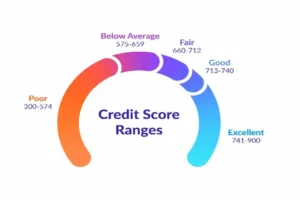
The most widely used model in the US is the FICO Score. Most banks and credit card issuers rely on it when making approval decisions.
Free platforms like Credit Karma and the Intuit Credit Score tool use VantageScore — a similar model on the same 300–850 scale, but with slightly different calculations under the hood.
The Five Factors That Determine Your Number
Your score is not random. It comes from five specific factors — each weighted differently.
- Payment History (35%) — Paying on time is the single most important factor
- Credit Utilization (30%) — How much of your available credit you are currently using
- Length of Credit History (15%) — How long your accounts have been open
- Credit Mix (10%) — The variety of account types you hold
- New Credit (10%) — How recently you applied for new credit
Payment history and utilization together make up 65% of your score. Fix those two first and the results come faster than most people expect.
What Each Score Range Actually Means
Where your number falls determines which products you qualify for — and at what cost.
- 800–850: Exceptional — best rates on everything
- 740–799: Very Good — strong approvals and competitive rates
- 670–739: Good — approved for most products at standard rates
- 580–669: Fair — limited options and higher interest rates
- 300–579: Poor — mainly secured cards and credit-builder products
A 776 Credit Score sits in the Very Good range. That means strong approval odds and access to most premium financial products without restrictions.
The Three Credit Bureaus and Why They All Matter
Three separate companies track your credit history — Equifax, TransUnion, and Experian. Each collects data independently, so your score can differ slightly between them.
Federal law requires all three to provide you with a free annual report through AnnualCreditReport.com. Review all three — not just one — to catch errors across your full profile.
Important: A single inaccurate negative item can suppress your score by 50 points or more. Disputing it costs nothing and can produce fast results once corrected.
Free Tools That Make Monitoring Simple
You do not need to pay for credit monitoring. These free platforms give you accurate, regularly updated scores alongside tools to understand and improve your number.
- Credit Karma — Free weekly scores from TransUnion and Equifax
- Credit Karma Simulator — Models the impact of financial decisions before you make them
- Credit Karma Credit Simulator — Test specific scenarios like paying down a balance and see the projected score change instantly
- Intuit Credit Score — Score monitoring integrated with budgeting tools in one platform
- Experian — Free FICO score access plus the Experian Boost feature that adds utility payments to your file
Running a quick scenario through the Credit Karma Credit Simulator before closing an account or applying for new credit takes under five minutes and can prevent costly mistakes.
How Your Score Affects More Than Just Loans
Most people connect credit scores to loan approvals. But the impact reaches further than that.
Your credit profile feeds into your Insurance Score — a related calculation used by many auto, home, and renters insurance providers to set your premium. A weaker credit profile can quietly raise your monthly insurance costs without you ever noticing the connection.
Landlords run credit checks before rental approvals. Some employers review credit reports as part of background screening. Your score touches more areas of daily life than most people realize.
How Credit Scores Work in the US: Steps to Improve Yours
A low score is not permanent. These are the steps that move the number upward — sequenced by speed and impact.
- Pull all three credit reports and look for errors. Disputing an inaccurate item is often the single fastest action that improves a score.
- Pay down revolving balances to reduce utilization. Getting below 30% — ideally below 10% — can produce a visible improvement within one billing cycle.
- Set up autopay for every account. Even one missed payment can significantly damage a score that is otherwise healthy.
- Avoid applying for new credit during recovery. Every hard inquiry temporarily lowers your score, and multiple applications signal financial stress to scoring models.
- Explore consolidation if you are managing multiple high-interest balances. A debt consolidation loan with 520 credit score is available through specialized lenders and can simplify repayment while reducing utilization at the same time.
- Use free simulators before making any major move. The Credit Karma Simulator shows you the projected impact of any action before it becomes permanent on your file.
Business Credit: A Separate System That Works in Parallel
If you own a business, your personal score is only half the picture. Business credit operates through a completely separate system — with its own bureaus, scoring models, and evaluation criteria.
Lenders and suppliers use your Business Credit Report to assess your company independently of your personal finances. Building and monitoring this profile matters just as much as managing your personal score.
A regular Business Credit Check through Dun & Bradstreet, Equifax Business, and Experian Business gives you accurate visibility into how your company looks to external evaluators.
Experian for Business and the Experian Business Credit platform offer dedicated monitoring and alert services built specifically for commercial credit health. Pulling your Experian Business Credit Report at least twice per year is the minimum standard for any business owner who takes their financial profile seriously.
Common Credit Score Myths Worth Clearing Up
Bad advice about credit scores is everywhere. Acting on it can actively damage a score that is otherwise improving.
- Checking your own score hurts it — False. Soft inquiries have zero impact on your score
- Closing old cards improves your score — False. It removes available credit and shortens account age, both of which lower your score
- Carrying a small balance builds credit — False. Pay in full every month. Carrying a balance only costs you interest
- You only have one credit score — False. You have dozens across different bureaus and scoring models
- Income affects your credit score — False. Your salary is never reported to credit bureaus
How Credit Scores Work in the US — Final Verdict
Your credit score is one of the most consequential numbers in your financial life — but it is also one of the most manageable once you understand what drives it.
Start with payment history and utilization. Use the Credit Karma Simulator and Intuit Credit Score tools to track progress in real time. Review all three bureau reports regularly and dispute any errors immediately.
For business owners, apply the same discipline to your commercial profile through regular Business Credit Check reviews and Experian Business Credit monitoring. Your company’s financial reputation deserves the same attention as your personal score.
All tools and platforms mentioned here are independent services. We hold no affiliation, sponsorship, or control over any credit bureau, financial institution, or third-party platform referenced in this article. Always verify current terms directly through each provider’s official website before making financial decisions.