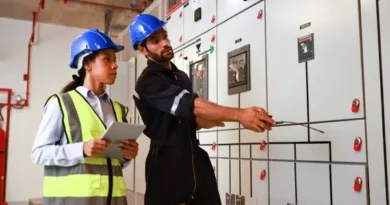
Electrician Apprenticeship Program: Your 2026 Career Roadmap
If you want a career that lets you earn while you learn, an Electrician apprenticeship program is one of the smartest paths you can take.
Anúncios
Instead of piling up student debt, you build real skills on job sites, get paid during training, and move toward journeyman status with a clear long-term payoff.
Anúncios
That is exactly why so many people searching for electrician trades near me or schools to become an electrician near me end up comparing apprenticeships first.
In this guide, you will understand how these programs work, which path may fit you best, what the 2026 application process usually looks like, and why now is such a strong time to get started.
Important: This content is independent, informational, and not affiliated with, sponsored by, or controlled by any union, contractor, school, training provider, company, or government agency mentioned here.
What an Electrician apprenticeship program really includes
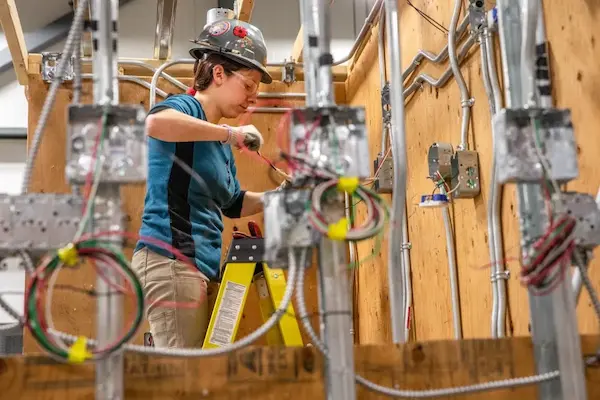
An Electrician apprenticeship program usually combines paid field experience with classroom learning.
In practice, you are not just sitting in a room memorizing theory.
You are learning how electrical systems work in real buildings, with real crews, under supervision, while steadily increasing your skill level and your earning power.
Most programs follow a structure that looks very close to this:
- Duration: usually 4 to 5 years.
- On-The-Job Electrical Training: often around 8,000 supervised hours.
- Classroom instruction: commonly about 600 to 900 hours, depending on the provider and region.
- End goal: qualification as a journeyman or journeyworker, depending on local terminology and licensing rules.
That mix is what makes the path so attractive.
You get hands-on experience, technical instruction, and a structured route into a trade that employers continue to need.
During training, you may study blueprint reading, wiring methods, electrical theory, safety practices, code, conduit bending, controls, troubleshooting, and specialized systems.
That is also why many people who start in an Electrical Trainee Program or an Electrician Trainee Program later move into a full apprenticeship once they understand the trade better.
And if you already looked into a Sparky Apprenticeship, a local contractor opening, or an IBEW Electrician Training route, you have already seen the same big theme: structured training creates stronger career momentum.
Common types of Electrician apprenticeship program options
The best path depends on your goals, your location, and how you want to train.
Some people want the strongest union structure possible.
Others want flexibility, quicker entry, or a contractor-led experience.
Here are the most common paths you will run into.
Union (JATC)
A union apprenticeship, often called a JATC Electrician Program, is typically run through a partnership linked to organizations such as IBEW and NECA.
This path is widely respected because it usually offers strong wages, benefits, and standardized training.
If you have heard of the IBEW Local 6 Apprenticeship or another local union option, this is the category it falls into.
Many applicants are drawn to the consistency of the curriculum and the reputation that comes with an Electrical Inside Wireman track.
Non-union (IEC/ABC)
Non-union programs are commonly sponsored by independent contractors and trade associations.
These can be excellent if you want more flexibility or a faster entry point.
In many markets, they are widely recognized and offer strong field exposure from the beginning.
If you are researching options like an Atlanta Electrical Apprenticeship through merit-shop training, this path may be worth serious attention.
Trade school pathway
Trade schools and technical colleges are not always apprenticeships by themselves, but they can absolutely help you get started.
Many students use local electrician schools to build foundational knowledge, improve their confidence, and make their apprenticeship application stronger.
Some programs may even count toward pre-apprenticeship or related instruction, depending on local rules.
This route is often helpful if you are still deciding between an Industrial Electrician Program, residential work, or commercial construction.
Direct-entry or employer-led programs
Some utility companies, large employers, or specialized contractors offer direct-entry training.
That can be especially valuable if you want exposure to infrastructure, power systems, or industrial environments.
You may also come across employer-branded options such as a Watson Electrical Apprenticeship, which can appeal to candidates who already know the kind of company culture and work setting they want.
How to choose the right Electrician apprenticeship program for you
The right choice is usually the one that matches your long-term goals, not just the first opening you see.
That matters because electrical work is broad.
You could move toward residential wiring, commercial construction, service work, industrial maintenance, utility systems, controls, or specialized infrastructure.
As you compare programs, look at these factors:
- Training model: Does it combine solid classroom teaching with strong field placement?
- Type of work: Is it focused on Inside Wireman, industrial, residential, utility, or mixed experience?
- Reputation: Is the curriculum structured and recognized in your market?
- Schedule: Can you realistically handle evening classes, travel, and job-site expectations?
- Career fit: Do you want construction, maintenance, large systems, or specialized electrical work?
If you are drawn to manufacturing, plants, controls, and troubleshooting, an Industrial Electrician Apprenticeship Program may suit you better than a standard commercial route.
If you want broad construction training and a classic field path, an Electrical Training Institute Apprenticeship or union-style inside wireman route may feel more aligned.
And if you are transitioning from military service, looking into Electrician Training For Veterans or other Veteran Electrician Programs can be a smart move because some programs recognize prior experience, discipline, and technical aptitude.
2026 requirements for an Electrician apprenticeship program
In 2026, competitive applicants usually need the same core foundation: education, math readiness, documentation, and the ability to handle physical job demands.
Requirements vary by provider and location, but the common expectations are very consistent.
- Age: Many programs require you to be at least 18 by the time you enter.
- Education: A high school diploma or GED is commonly required.
- Math background: Many programs want at least one year of Algebra, often with a passing grade and sometimes a C or better.
- Aptitude test: Union and many larger private programs may require reading comprehension and math testing.
- Driver’s license: Often required because apprentices travel to class and to different job sites.
- Physical ability: You may need to lift materials, work at heights, crawl into tight spaces, and distinguish colors for wiring tasks.
- Drug-free status: Some programs and employers require screening.
That may sound like a lot at first.
Still, once you break it into steps, it becomes very manageable.
The biggest mistake is waiting too long to gather your paperwork.
Your transcript, GED records, proof of algebra, photo ID, driver’s license, and possibly military paperwork should be ready before applications open.
How to apply to an Electrician apprenticeship program in 2026
The application process is usually more straightforward than people expect.
What makes it feel overwhelming is not the difficulty.
It is the lack of preparation.
Here is the path most applicants follow:
- Choose your target programs.Compare union, non-union, employer-led, and school-supported options in your area.
- Confirm the exact entry requirements.Check age, algebra, testing, transcripts, and driver’s license expectations before you apply.
- Prepare your documents early.Official transcripts and proof of graduation can take time to collect.
- Study for the aptitude test.Focus on algebra, functions, basic geometry, and reading comprehension.
- Apply during the intake window.Some programs accept applications year-round, while others open only at set periods.
- Interview professionally.Show reliability, interest in the trade, willingness to learn, and comfort with physical work.
- Stay flexible and follow up.Openings may depend on contractor demand, class schedules, and regional workload.
When you interview, be honest about why you want the trade.
You do not need to sound perfect.
You need to sound ready.
That means showing up on time, understanding the realities of the work, and explaining that you are looking for a long-term career rather than a short-term paycheck.
Why starting your Electrician apprenticeship program now makes sense
Starting now makes sense because demand for electricians remains strong, and several industry trends continue to support long-term opportunity.
Electrical work is tied to new construction, modernization, maintenance, electrification, and infrastructure upgrades.
That creates durable demand across multiple sectors instead of relying on one single niche.
Three trends matter especially right now:
- Electrification and EV infrastructure: Charging expansion and related electrical upgrades continue to create work tied to power delivery and installation needs.
- Renewable energy and storage: Solar integration, battery systems, and smart electrical infrastructure all need trained workers.
- Retirements and replacement demand: A significant share of job openings comes from experienced workers leaving the labor force.
That combination is a big reason many career changers are taking this path seriously.
It is not only about getting a job.
It is about entering a trade with staying power.
For you, that can mean better stability, a clearer earnings path, and a skill set that stays valuable in many markets.
Who should seriously consider an Electrician apprenticeship program
An Electrician apprenticeship program can be a strong fit if you like hands-on work, problem-solving, and building skills that lead to real independence.
You do not need to know everything before you start.
You simply need the willingness to learn, follow safety rules, and keep improving over time.
This path may be especially right for you if:
- You want to earn money while training.
- You prefer practical learning over a traditional four-year college route.
- You are looking for a career with advancement potential.
- You are comfortable with physical work and changing job environments.
- You want a respected trade that can open doors in residential, commercial, and industrial settings.
Whether you start through a union route, a merit-shop opening, an Industrial Electrician Apprenticeship Program, or one of the local electrician schools that helps you build a foundation, the key is to start with a plan.
The sooner you prepare, the stronger your options become.
Final thoughts on choosing an Electrician apprenticeship program
The best Electrician apprenticeship program is not just the one with the loudest name.
It is the one that gives you a credible path to skills, field experience, steady growth, and long-term opportunity.
If you are serious about becoming an electrician, this is the moment to get organized.
Research your local options, prepare your documents, sharpen your algebra, and apply with intention.
That single decision can move you from “thinking about it” to building a trade career that pays you back for years.