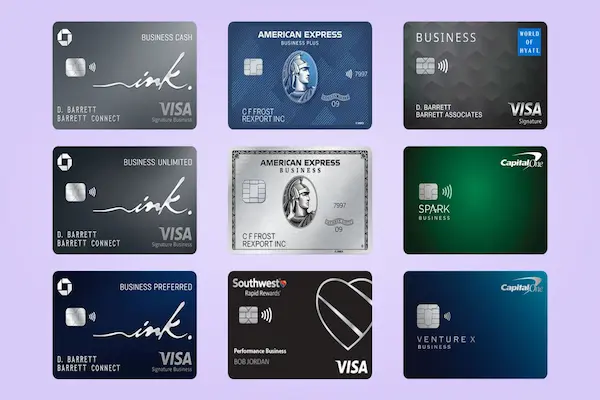
Finding the best business credit card for multiple employees means more than just picking the highest rewards rate — it means finding a card that keeps your team productive, your spending visible, and your company protected.
Managing employee spending is one of the most common pain points for growing businesses, and the right business credit card can transform that challenge into a genuine competitive advantage.
In this guide, you’ll find the top cards built specifically for multi-employee use, what features matter most when your team is doing the spending, and how to avoid the most common mistakes business owners make when extending credit to their staff.
Related Articles
- Best Chase Business Credit Cards: Full Guide
- Top Cash Back Business Credit Cards in 2026
- How to Apply for a Chase Business Credit Card
- Best Capital One Business Credit Cards Compared
- Business Credit Cards With Rewards and No Annual Fee

What to Look for in a Business Card When Multiple Employees Are Spending
When multiple people are using the same business credit account, several features become dramatically more important than they are for a solo business owner.
Individual employee card controls are the foundation. The best cards for teams let you set separate credit limits for each employee, restrict specific spending categories if needed, and enable real-time alerts for every transaction — so you know what’s being spent, by whom, and on what, before the monthly statement arrives.
Free employee cards matter more than most people realize when you’re calculating actual cost. Some issuers charge $25–$95 per additional cardholder annually. For a team of 10, that’s up to $950 in added fees purely for access — before a single dollar of rewards offsets it.
Consolidated reporting is the difference between spending an afternoon reconciling expenses and having it done automatically. Cards that integrate with QuickBooks, Xero, or other accounting software turn what used to be a manual process into a near-automated one.
Liability and fraud protection at the employee level protects the business when an employee misuses their card or makes an unauthorized purchase. Understanding how each issuer handles disputes involving employee cards should factor into your choice.
Best Business Credit Cards for Multiple Employees in 2026
1. Chase Ink Business Preferred® — Best Overall for Teams
The Ink Business Preferred earns 3X points on the first $150,000 in combined annual spending across travel, shipping, telecom, internet services, and digital advertising. Every employee card earns at the same rate as the primary account — meaning your team’s spending directly builds your rewards balance.
Employee cards are added at no additional cost, and you can set individual spending limits for each cardholder through Chase’s online portal. Real-time transaction alerts keep you informed the moment any employee card is used.
For teams where multiple people regularly book travel, purchase supplies, or manage recurring subscriptions, the 3X earning rate in those categories compounds quickly across multiple cardholders. A team of five employees each spending $2,000/month in eligible categories generates 30,000 points per month — or 360,000 points annually from team spending alone.
Welcome bonus: 100,000 points after spending $8,000 in 3 months. Annual fee: $95.
> **Best for:** Teams with significant combined spending in travel, telecom, shipping, or digital advertising.
2. Capital One Spark Cash Plus — Best for Maximum Flat-Rate Cash Back Across All Team Spending
The Spark Cash Plus earns unlimited 2% cash back on every purchase — with no categories, no caps, and no exceptions. When multiple employees are spending across diverse categories, a flat-rate card often outperforms a category-specific one simply because there’s no dilution from purchases that fall outside the bonus tiers.
Capital One provides free employee cards and virtual card numbers, along with a robust online dashboard for monitoring spending across your entire team in real time. The no-preset spending limit (it’s a charge card, paid in full monthly) means the card scales with your team’s needs without hitting arbitrary credit ceilings during high-spend months.
The $150 annual fee is waived entirely when your total annual spend reaches $150,000 — which is achievable for teams with even moderate combined monthly expenses.
> **Best for:** Teams with diverse spending across many categories where a flat 2% rate beats trying to optimize category-by-category.
3. American Express Business Platinum Card® — Best for Teams That Travel Frequently
For businesses where employees travel regularly, the Amex Business Platinum delivers a suite of travel benefits that go well beyond rewards rates. Each employee card provides access to the Global Lounge Collection — over 1,550 airport lounges worldwide — turning layovers into productive, comfortable work sessions for your team.
The card earns 5X Membership Rewards points on flights and prepaid hotels booked through AmexTravel.com, plus 1.5X on eligible purchases at U.S. construction material merchants, shipping providers, electronic goods retailers, software and cloud system providers, and on purchases of $5,000 or more.
The annual fee is significant ($695 in 2026, following the September 2025 increase), but the combination of over $850 in annual statement credits — including software, airline incidentals, and lounge access — makes the net cost manageable for businesses that actively use the benefits.
Employee cards can be added for an additional annual fee per user, which should be factored into your total cost calculation. The card is best suited for businesses where frequent business travel is the norm across multiple team members.
> **Best for:** Companies with multiple frequent business travelers who can take full advantage of lounge access and travel credits.
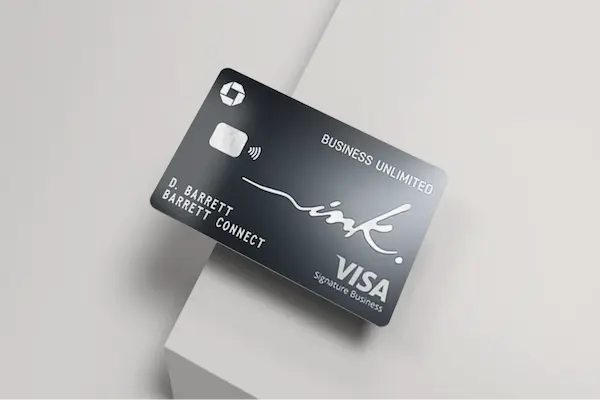
4. Ink Business Unlimited® — Best No-Fee Option for Growing Teams
The Ink Business Unlimited offers unlimited 1.5% cash back on every purchase with zero annual fee and free employee cards at no additional cost. For businesses in growth mode that want to extend spending power to their team without adding fixed overhead costs, this card offers an excellent combination of simplicity, reach, and value.
It’s particularly effective as part of a two-card strategy: pairing the Ink Business Unlimited (for general team spending) with the Ink Business Cash (for office supply and telecom purchases by specific team members) creates comprehensive coverage across all spending categories with zero combined annual fee.
Both cards’ rewards can be pooled into a premium Chase account to unlock access to travel transfer partners — effectively turning team cash-back spending into high-value travel redemptions.
> **Best for:** Growing teams that want broad employee card access with no annual fee and straightforward reward tracking.
5. Ramp Corporate Card — Best for Businesses Focused on Spend Management Over Rewards
The Ramp Corporate Card takes a fundamentally different approach compared to traditional business credit cards. Rather than optimizing for rewards, Ramp is designed to help businesses actively spend less — offering no annual fee, no foreign transaction fees, no personal guarantee requirement, and an integrated spend management platform built for teams.
Ramp earns 1.5% cash back on all purchases and provides unlimited virtual and physical employee cards with granular controls — spending limits, category restrictions, vendor-level controls, and automatic receipt matching. The platform integrates natively with QuickBooks, Xero, Sage, and other accounting tools, significantly reducing finance team workload.
Eligibility requires a registered business entity (LLC, LP, or corporation) with at least $25,000 in a U.S. business bank account. No personal credit check is needed — approval is based on business financials rather than the owner’s personal credit score, making it accessible to founders of newer companies.
> **Best for:** Businesses prioritizing expense management automation, compliance, and cost control over maximum reward optimization.
Setting Up Employee Cards the Right Way
Getting the most from a multi-employee business card requires more than just ordering cards for your team. A few setup steps make the difference between smooth operations and a reconciliation nightmare.
- Set individual credit limits — Don’t give every employee the same limit. Tailor limits based on each person’s role and expected spending. A field sales rep booking travel needs more capacity than an administrative employee ordering supplies.
- Enable real-time transaction alerts — Configure email or text alerts for every employee card transaction. This gives you immediate visibility without waiting for month-end statements.
- Establish a clear expense policy — Define what’s authorized spending, what categories require pre-approval, and how employees should handle receipts. A card with great controls is still undermined by unclear expectations.
- Use virtual cards for recurring vendors — Assign unique virtual card numbers to specific vendors or subscription services. This makes it easy to track vendor costs, revoke access without canceling the physical card, and quickly identify unauthorized charges.
- Review employee spending monthly — Most business card dashboards allow you to filter spending by employee and category. A monthly review catches anomalies early and reinforces the expense policy with your team.
Employee Card Fees: A Cost Comparison
| Card | Employee Card Fee | Annual Fee |
|---|---|---|
| Chase Ink Business Preferred | Free | $95 |
| Chase Ink Business Unlimited | Free | $0 |
| Capital One Spark Cash Plus | Free | $150 (waived at $150K spend) |
| Capital One Venture X Business | Free | $395 |
| Amex Blue Business Cash | Free | $0 |
| Amex Business Platinum | Per-card fee applies | $695 |
| Ramp Corporate Card | Free (unlimited) | $0 |
The Hidden Value of Team-Wide Rewards Accumulation
One of the most underappreciated aspects of business credit cards for teams is how quickly rewards compound when multiple employees are spending on the same account.
A business owner spending $3,000 per month earns $540 in cash back annually at 1.5%. That same business with five employees each spending $3,000 per month earns $2,700 annually — or $4,500 with a 2.5% card on large purchases. With a 100,000-point welcome bonus earned from meeting the spend threshold (easier when team spending counts), the first-year value can exceed $5,000 in real reward value.
The businesses that get the most from their business cash back cards are usually those that treat employee card selection as a strategic financial decision — not just a convenience for their team.
This content is independently produced and is not affiliated with or sponsored by any card issuer mentioned. All offer details reflect publicly available information current as of April 2026 and are subject to change. Verify current terms and employee card policies directly with the card issuer before applying.
Explore more business card comparisons and strategy guides in our credit and finance resource center