Dental grants can cut the cost of fixing your teeth, even with no insurance.
Real programs pay for implants, dentures and full treatment for people in need.
See below how to apply today and which programs are completely free.
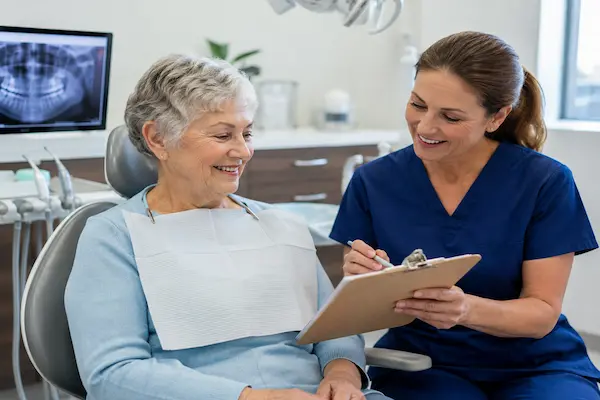
How to apply for dental grants right now
The fastest way to apply for a real dental grant is through the Donated Dental Services (DDS) program, run by the nonprofit Dental Lifeline Network. It connects people who cannot pay for treatment with more than 15,000 volunteer dentists and 3,600 dental labs across the United States, at no cost to the patient.
Since 1985, the program has donated over $250 million in dental care. The application is free and works in every state. Tap the button below to open the official application page.
🦷 APPLY FOR DONATED DENTAL SERVICES
1Open the official application
Go to the Dental Lifeline Network application page and fill out every section. Do not leave anything blank, because incomplete forms slow down your review.
2Send your documents
Have proof of income ready, plus disability or Social Security papers if you receive them. If a doctor says you need dental care for a medical reason, ask for that letter too.
3Wait for the waitlist call
You are placed on a waitlist in the order applications arrive. You get a confirmation within about one month. The wait for treatment can take several months, depending on your county.
4See the volunteer dentist
If approved, you are matched with a volunteer dentist near you for a first consultation. Final acceptance happens after that visit, and treatment is provided at no cost.
While you wait, it is smart to line up a backup. Call 2-1-1 from any phone. It is a free helpline that finds low-cost dental clinics in your zip code, including ones where qualifying patients pay nothing.
What dental grants cover and how much you save
Most real dental grant programs cover exams, cleanings, fillings, extractions, root canals and dentures. Some also help with dental implants, but implants depend on the program and the dentist, so they are never guaranteed.
The savings are big. At dental school clinics, supervised students charge 40% to 70% less than private offices. A set of dentures that costs $2,500 to $4,000 at a private dentist runs about $600 to $1,200 at a dental school. A root canal drops from around $1,425 to roughly $400 to $600.
One thing matters here. Grant money for dental work almost never arrives as cash in your hand. Real programs pay the dentist directly or provide the treatment for free. Any offer promising to send you money should make you suspicious.
There are also smaller sources of financial help for dental work. State dental associations run local charity funds, and some nonprofit clinics reserve free slots every month for urgent cases. These options change by region, which is why calling your county health department is always worth the five minutes.
Who qualifies for a dental grant
Each program has its own rules, but the profile is similar: people who need major dental work and cannot pay for it. The Donated Dental Services program, the largest one in the country, asks that you meet at least one of the conditions below.
If you do not fit that profile, you still have paths. Community health centers accept anyone, regardless of income. Dental schools accept the general public. Some states and local charities run their own dental grant programs for low income adults, so it is worth asking your county health department what exists near you.
Government dental grants and free care programs
The federal government does not mail dental grant checks to individuals. What the government does instead is fund care. That funding shows up in three main ways, and all three can get your teeth fixed for free or close to it.
First, Medicaid (the public health insurance for low income people). As of this year, 38 states and Washington, D.C. offer expanded adult dental benefits through Medicaid, the highest number in the program’s history. If your income is low, apply through your state before anything else.
Second, community health centers, also called FQHCs. These clinics are funded by the federal government and must see you even if you cannot pay. Fees slide down with your income. For a single person earning around $15,960 a year or less, the visit can cost nothing. You can find one through the HRSA health center locator or by calling 1-877-464-4772.
Third, free events and veteran care. Mission of Mercy clinics travel to fairgrounds and schools offering free treatment with no proof of income. Veterans may qualify for care through VA Dental, depending on their situation.
To use these government dental grant paths, the order matters. Check Medicaid first, since approval there opens the cheapest door. Then locate the nearest community health center and ask if it has a dental program, because not every site does. Keep the free events as a fallback for cleanings, fillings and extractions while you wait for something bigger.
Watch out for fake dental grant programs
Search results for dental grants are full of traps. The most common one is a website that uses the word grant but actually sells a discount. You apply, get approved fast, and discover the grant only covers part of an expensive treatment plan at a partner dentist.
Some well known cosmetic dentistry grant programs work exactly like that. Consumer complaint boards and news reports have documented people who never received the promised money. Others charge a deposit over the phone just to book your first visit.
🚫 Warning: A real dental grant never asks you to pay a fee, a deposit or upfront costs to apply. If money is requested before treatment, walk away.
Quick checklist before trusting any program: it should be a registered nonprofit or government funded, the application must be free, and the help should be treatment paid for you, not a percentage discount. Donated Dental Services, community health centers and Medicaid pass this test. Anonymous grant websites with countdown timers do not.
Common questions about dental grants
Are there dental implant grants for seniors?
Yes, but with limits. Seniors 65 and older qualify for Donated Dental Services, and treatment can include dentures when necessary. Implants depend on the volunteer dentist and are not guaranteed. Dental schools are another option, offering implants at reduced prices.
Are there grants for dentures?
Yes. Dentures are one of the most common treatments provided through Donated Dental Services. If you do not qualify there, dental school clinics make dentures for about $600 to $1,200, far below private prices.
Do free dental grants for low income adults exist?
They exist as free care, not as cash. Low income adults can get $0 treatment through community health centers, Medicaid in most states, Mission of Mercy events and charity programs. The help pays the dentist directly.
What about cosmetic dentistry grants?
Be very careful. Programs offering cosmetic dentistry grants usually give partial discounts at partner dentists, and several have serious consumer complaints. Charity programs like Donated Dental Services do not cover cosmetic work, only necessary treatment.
How do I find dental grants near me?
Call 2-1-1 and say you need dental care and cannot afford it. The operator lists clinics, events and grant programs in your county. You can also search the HRSA health center locator online using your zip code.
Is applying for a dental grant worth it?
Yes, as long as you apply to the right places. The application is free, the programs are real, and the savings can reach thousands of dollars. The trade-off is patience, since waitlists exist almost everywhere.
Start with the Donated Dental Services application today, call 2-1-1 for local backup options, and check if your state’s Medicaid covers adult dental. Doing the three together gives you the best chance of getting treated soon.
Your teeth affect your health, your job interviews and your confidence. Waiting only makes treatment more expensive. The programs on this page exist exactly for people in your situation, and every application listed here costs nothing to send.
ℹ️ Important: This is an independent informational article. We are not affiliated with any government agency or dental program, and we never ask for payment or personal data. Program rules, coverage and waitlists change by state, so always confirm details on the official pages.